Why Microfinance Is Key to Building a Stronger Rural Economy
India’s rural economy is often called the backbone of the nation. It sustains nearly 65% of the population and contributes significantly to GDP through agriculture, handicrafts, and small-scale industries. Yet, access to credit and formal financial services in rural India remains limited. This is where microfinance steps in as a transformative force.
In this article, we will explore Why Microfinance Is Key to Building a Stronger Rural Economy, its impact on small entrepreneurs, women empowerment, and financial inclusion — and how technology, particularly the Best microfinance software, is accelerating this movement. We’ll also highlight how companies like Gtech Web Solutions, the best micro finance software company, are helping shape the digital future of microfinance institutions.
Understanding the Concept of Microfinance
Before understanding Why Microfinance Is Key to Building a Stronger Rural Economy, it’s essential to grasp what microfinance truly means.
Microfinance refers to financial services — mainly small loans (microloans), savings, and insurance — provided to low-income individuals or small businesses that don’t have access to traditional banking systems. These services are usually offered through Microfinance Institutions (MFIs) or Self-Help Groups (SHGs).
Unlike commercial banks, which rely heavily on credit scores and collateral, microfinance focuses on trust, community support, and social accountability. This model has successfully empowered millions of people across rural India, giving them the financial means to build livelihoods and secure a better future.
Also read: How Does Micro Loan Management Software Improve Lenders’ Profitability?
Why Microfinance Is Key to Building a Stronger Rural Economy: The Core Reasons
The importance of microfinance lies not only in lending money but also in creating opportunities, empowering individuals, and uplifting entire communities. Let’s dive deeper into Why Microfinance Is Key to Building a Stronger Rural Economy.
1. Financial Inclusion for the Unbanked
A major reason Why Microfinance Is Key to Building a Stronger Rural Economy is its ability to bridge the gap between rural communities and the formal banking system.
For decades, rural populations have struggled with limited access to banking facilities due to:
- Distance from branches
- Lack of documentation
- Low literacy levels
- High transaction costs
Microfinance institutions address these challenges by bringing simple, accessible financial solutions directly to people’s doorsteps. When rural households gain access to credit, savings, and insurance, they can manage risks better, invest in businesses, and improve their overall living standards.
Financial inclusion enables self-reliance — the cornerstone of a strong rural economy.
2. Empowering Women Entrepreneurs
Another vital aspect of Why Microfinance Is Key to Building a Stronger Rural Economy is its role in women’s empowerment.
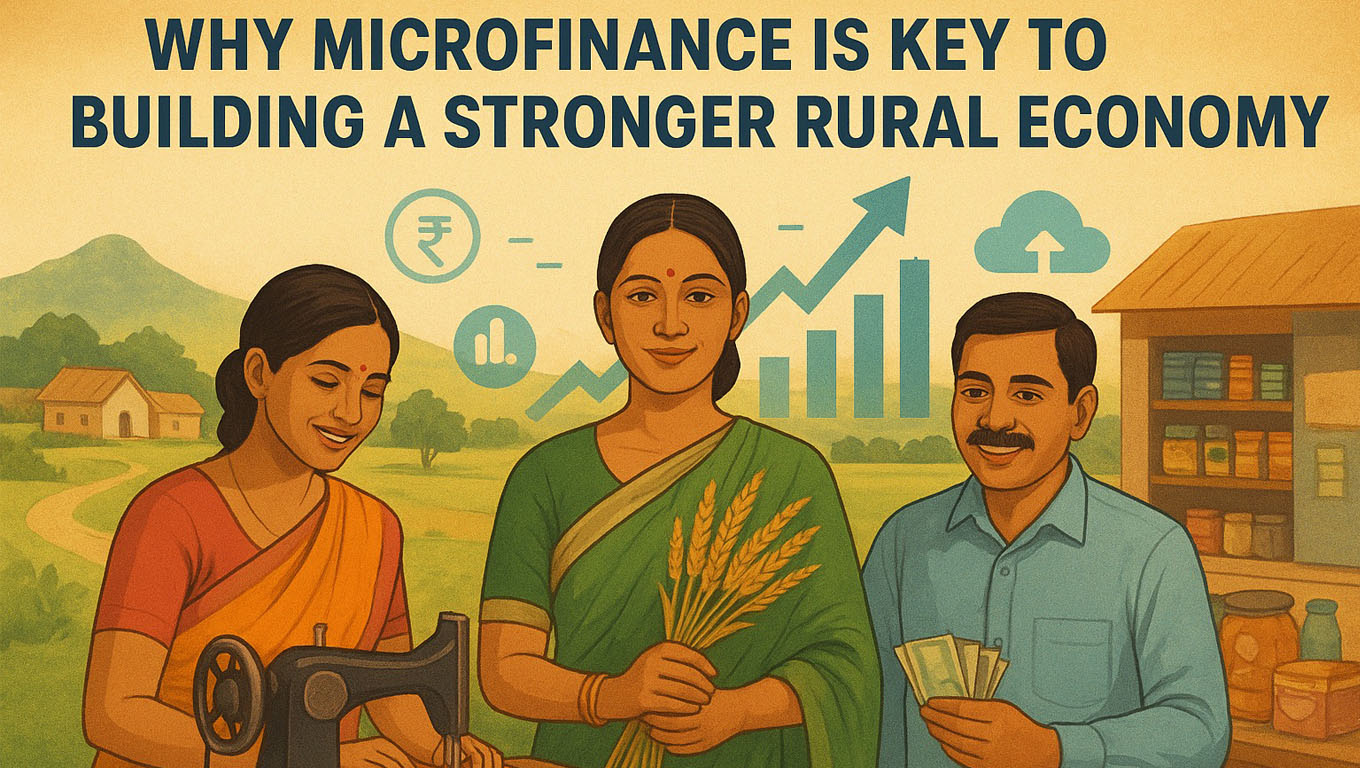
In India, a large percentage of microfinance borrowers are women. By offering small loans to women for starting home-based enterprises — like tailoring, livestock rearing, handicrafts, or food processing — microfinance gives them financial independence and a voice in decision-making.
Studies show that when women earn, the benefits extend beyond households. It leads to:
- Better nutrition and healthcare
- Improved education for children
- Community-level growth
Empowered women create stable families and resilient communities — the true building blocks of a stronger economy.
3. Stimulating Local Entrepreneurship and Job Creation
One of the strongest arguments in favor of Why Microfinance Is Key to Building a Stronger Rural Economy lies in its ability to stimulate entrepreneurship.
When individuals access small loans, they often invest in micro-enterprises — from dairy farming to weaving, from small retail shops to local transport services. These ventures generate employment, reduce migration to urban centers, and create self-sustaining ecosystems.
Microfinance nurtures a cycle of growth:
- Credit Access → Business Start-up → Employment → Income Generation
→ Loan
Repayment → Reinvestment.
As these cycles multiply across villages, they collectively strengthen the rural economy.
4. Reducing Rural Poverty and Inequality
Microfinance is more than financial lending; it’s a tool for poverty alleviation. By giving small borrowers access to funds, it helps them escape the clutches of local moneylenders who often charge exorbitant interest rates.
Rural families can invest in assets like livestock, agricultural tools, or small businesses. This creates sustainable income streams and reduces economic inequality between rural and urban populations.
That’s why economists often emphasize Why Microfinance Is Key to Building a Stronger Rural Economy — because it’s not about charity, but empowerment through opportunity.
5. Supporting Agriculture and Allied Sectors
Agriculture forms the foundation of rural livelihoods, but farmers often struggle with credit for seeds, fertilizers, and equipment. Microfinance institutions step in to fill this gap by offering small, timely loans.
When farmers get access to capital, they can adopt better technology, enhance productivity, and manage risks related to crop failure or market price fluctuations.
Moreover, microfinance supports allied sectors like dairy farming, fisheries, and poultry, which collectively create more income opportunities. This agricultural support is another reason Why Microfinance Is Key to Building a Stronger Rural Economy.
6. Encouraging Savings and Financial Discipline
Microfinance not only promotes lending but also encourages savings habits among the rural poor. Many MFIs run savings programs where members deposit small amounts regularly.
These savings help rural households manage emergencies, reduce dependence on loans, and develop a culture of financial discipline. Over time, these savings become sources of investment capital for local development, creating a long-term positive economic cycle.
7. Building Social Capital and Community Trust
Microfinance operates largely on group-based lending models, where borrowers form self-help groups or joint liability groups. This structure fosters trust, accountability, and cooperation.
Group members support each other, ensure timely repayments, and share knowledge about best practices in business and farming. This social cohesion strengthens community ties and indirectly contributes to economic development.
In this sense, Why Microfinance Is Key to Building a Stronger Rural Economy also includes its ability to unite communities toward common progress.
The Role of Technology in Microfinance
In today’s digital era, technology has become a game-changer for financial services. The microfinance sector is no exception. Modern technology is helping MFIs reduce costs, improve efficiency, and expand their reach to remote regions.
Here’s how technology — especially the Best microfinance software — is reshaping the sector:
- Automation of Loan Processes – From application to disbursal, automation ensures faster and more transparent loan management.
- Accurate Data Tracking – Digital systems enable MFIs to maintain borrower records, repayment schedules, and credit history with accuracy.
- Mobile-Based Services – Rural customers can make payments, check balances, and apply for loans using mobile apps.
- Risk Assessment Tools – AI-powered systems help predict borrower behavior and reduce defaults.
- Regulatory Compliance – Technology simplifies compliance with RBI and NBFC regulations.
These innovations allow microfinance institutions to scale sustainably and serve millions efficiently.
Promoting Digital Transformation: Gtech Web Solutions
While many companies offer financial technology tools, Gtech Web Solutions stands out as the best micro finance software company in India.
Their advanced digital platform provides end-to-end solutions for microfinance institutions — from customer onboarding to loan disbursal and analytics. Gtech’s Best microfinance software is built to handle the specific challenges of rural financing, including low connectivity areas, multilingual support, and real-time reporting.
Key Features of Gtech’s Microfinance Software:
- Cloud-based architecture for scalability and security.
- AI-driven borrower risk analysis.
- Mobile-first design for field officers and customers.
- Comprehensive dashboards and analytics.
- Compliance-ready modules for RBI and NBFC norms.
By leveraging such technology, microfinance institutions can reach more customers, improve transparency, and ultimately make a deeper impact on rural economic growth.
Gtech Web Solutions’ innovation showcases how digital transformation can make microfinance smarter, faster, and more inclusive — a crucial element in understanding Why Microfinance Is Key to Building a Stronger Rural Economy.
Challenges in the Microfinance Ecosystem
While microfinance has achieved remarkable progress, it also faces challenges that must be addressed for sustainable growth:
- Over-Indebtedness – Borrowers taking multiple loans from different MFIs can lead to repayment issues.
- Operational Costs – Managing rural operations remains expensive due to geographical spread.
- Regulatory Compliance – Constantly evolving RBI norms require MFIs to stay updated.
- Financial Literacy Gaps – Many rural borrowers lack understanding of interest rates, EMIs, or savings products.
- Climate and Economic Risks – Natural disasters or inflation can impact loan recovery rates.
Solving these issues requires a mix of policy support, financial education, and technology adoption.
Recommended Read: How Share Market Awareness Can Strengthen Microfinance Outcomes
The Future of Microfinance in Rural India
The future looks promising. As India’s digital infrastructure strengthens through initiatives like Digital India, microfinance institutions will become even more accessible.
With the help of cloud technology, AI, and mobile apps, MFIs will continue to innovate — offering smarter financial products, better risk management, and wider inclusion.
Moreover, the partnership between technology providers like Gtech Web Solutions and financial institutions will ensure the sector’s long-term growth and sustainability.
Conclusion
In conclusion, Why Microfinance Is Key to Building a Stronger Rural Economy lies in its power to transform lives, empower women, fuel entrepreneurship, and drive inclusive growth. It connects financial opportunity with human potential, creating an economic ecosystem where everyone can thrive.
With technological support from innovators like Gtech Web Solutions, the best micro finance software company, and their Best microfinance software, the future of rural finance looks smarter, more transparent, and far-reaching than ever before.
Microfinance is not merely about lending money — it’s about building hope, stability, and progress. And that’s exactly Why Microfinance Is Key to Building a Stronger Rural Economy.